

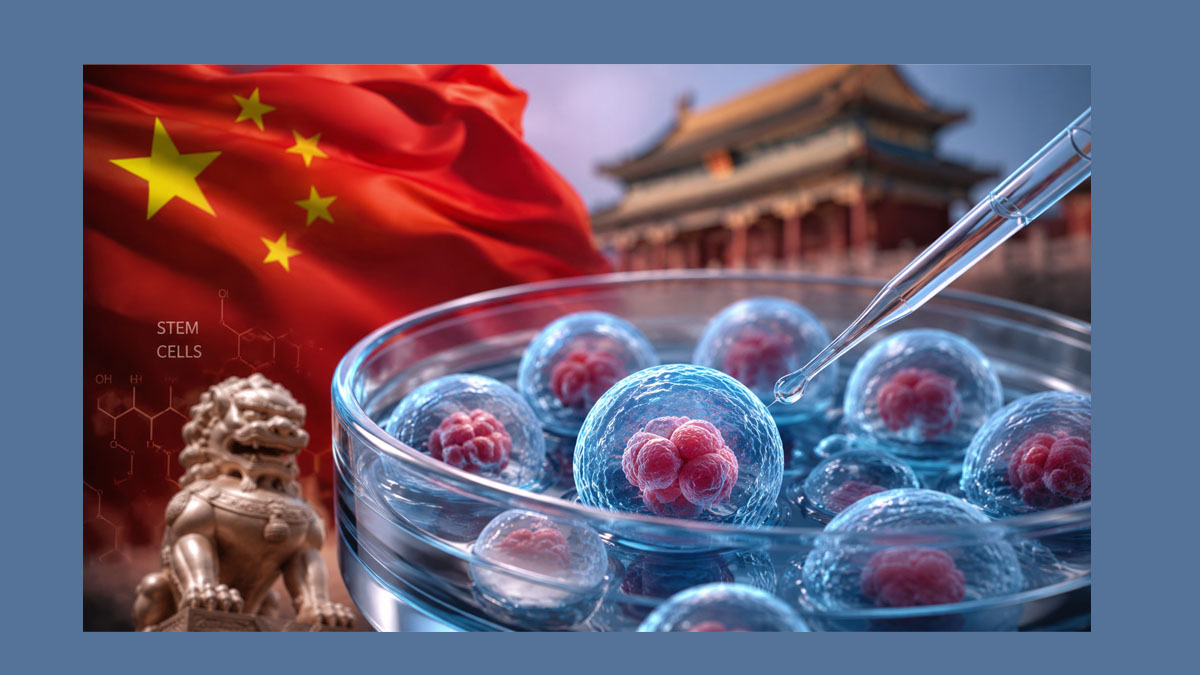
As China confronts the challenges of a rapidly aging population, one of the country’s most respected medical institutions is launching an ambitious effort to determine whether stem cells can help people stay healthier, stronger, and more independent as they grow older. According to announcements from Beijing’s PLA General Hospital, commonly known as 301 Hospital, researchers have begun recruiting participants for what is being described as China’s first large-scale clinical trial focused specifically on stem cell based anti-aging therapy.
The study represents one of the most significant attempts anywhere in the world to answer a question that has fascinated scientists, investors, and longevity enthusiasts for years: can stem cells meaningfully slow or reverse some of the physical declines associated with aging?
A Massive Trial Focused on Aging
The new study is being led by the Department of Geriatrics at 301 Hospital as part of China’s National Key Research and Development Program. Researchers plan to enroll 2,000 adults aged 50 and older in a multicenter, randomized controlled trial, making it one of the largest anti-aging stem cell studies ever attempted in China.
The trial is targeting individuals who are already experiencing declines in what researchers call “intrinsic capacity,” or those who may be at risk of developing age related physical limitations. Rather than focusing on a single disease, investigators hope to determine whether stem cells can help preserve overall function and resilience as people age.
This approach reflects a growing trend within longevity science. Instead of treating diseases such as heart disease, diabetes, or dementia one at a time, researchers are increasingly interested in addressing the biological processes that contribute to many age related conditions simultaneously.
What Is Ruibosheng?
The therapy being tested is known scientifically as amimestrocel and is marketed under the trade name Ruibosheng. Its active ingredient consists of mesenchymal stem cells derived from human umbilical cord tissue. These cells have attracted considerable scientific interest because they appear to regulate inflammation, support tissue repair, and influence immune system activity.
Those characteristics have made mesenchymal stem cells one of the most widely studied forms of regenerative medicine worldwide. Researchers believe chronic inflammation and declining tissue repair mechanisms play major roles in the aging process, making these cells a logical candidate for investigation.
Ruibosheng is not an experimental therapy entering human use for the first time. China’s National Medical Products Administration granted the treatment conditional approval on January 2, 2025 through a priority review pathway. The approval made it China’s first approved stem cell drug.
Its original approved use was for steroid resistant acute graft-versus-host disease, a potentially life threatening complication that can occur after stem cell transplantation. Since entering clinical practice in June 2025, the therapy has reportedly been adopted at more than 70 transplant centers across China.
What Symptoms of Aging Are Being Targeted?
Researchers are not claiming the therapy will make people look younger or reverse aging entirely. Instead, the study focuses on age related declines in physical capability and overall function. Participants are individuals who have already experienced decreases in strength, resilience, or other measures of healthy aging, or who are considered at risk for those declines.
The hope is that stem cells may help maintain independence, mobility, vitality, and quality of life as people grow older. Scientists are particularly interested in whether the cells can reduce chronic inflammation and support the body’s natural repair mechanisms, both of which tend to deteriorate with age.
Researchers emphasize that whether stem cells can achieve these goals remains an open scientific question, which is precisely why the large trial is being conducted.
While researchers have not publicly announced a final completion date, the scale of the project suggests it will be a multi-year effort. Recruiting 2,000 participants across multiple centers, administering treatment, and then tracking outcomes related to aging and functional decline will require substantial follow up time before definitive conclusions can be reached.
The randomized controlled design is intended to separate real biological effects from placebo responses, wishful thinking, and marketing claims that have often surrounded stem cell therapies in the past.
Other Potential Uses for Stem Cells
The anti-aging trial is only one part of a broader effort to explore the capabilities of mesenchymal stem cells. According to information released by the therapy’s developer, Platinum Life Excellence Biotech, researchers have already begun investigating additional applications including diabetic kidney disease and vascular aging.
Beyond those areas, stem cell therapies have been studied or approved for a variety of conditions worldwide. Existing evidence is strongest for graft-versus-host disease and certain blood related disorders requiring stem cell transplantation. Researchers have also explored potential uses in knee osteoarthritis, spinal cord injuries, heart failure, liver disease, diabetic wound healing, and autoimmune disorders.
Globally, only a small number of mesenchymal stem cell therapies have received regulatory approval. Industry sources note that approximately a dozen such products have been approved worldwide, highlighting both the promise and the difficulty of translating stem cell research into proven medical treatments.
Cautious Optimism From Researchers
The launch of the study has generated excitement within the longevity field, but researchers are also urging caution. Stem cells have long occupied a unique place in public imagination, often promoted as a potential solution for everything from injury recovery to age reversal. However, many of those claims have outpaced the available evidence.
That is why supporters of the new trial emphasize the importance of rigorous scientific testing. Rather than relying on anecdotes or marketing, the study seeks to produce high quality human data that can determine whether stem cell therapies genuinely improve healthy aging or whether their benefits have been overstated.
For China, the stakes are especially high. The country is facing a rapidly aging population and growing pressure on healthcare systems. If therapies such as Ruibosheng can help older adults maintain strength, independence, and quality of life for longer periods, the implications could extend far beyond individual patients.
Whether the results ultimately validate stem cell based anti-aging treatments or reveal important limitations, the findings are expected to provide valuable evidence for one of medicine’s most closely watched frontiers. As China searches for ways to help its citizens not only live longer but live better, this landmark trial may offer an early glimpse into the future of longevity medicine
