

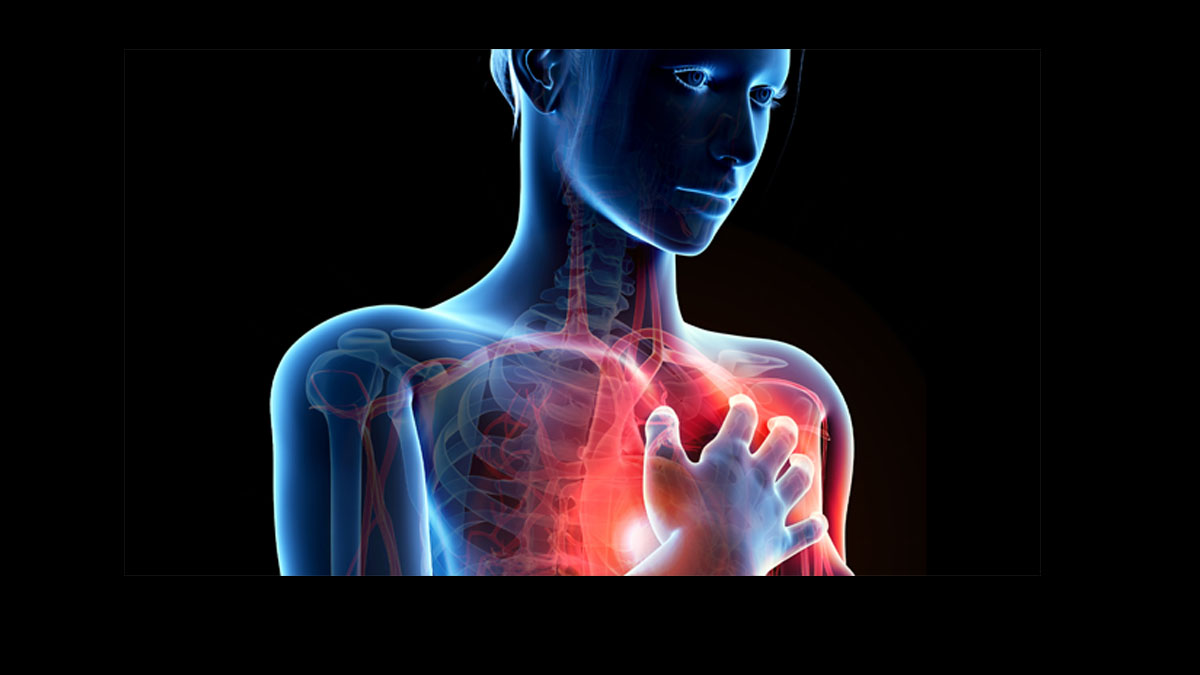
When Chest Pain Isn’t What You Think
You wake up in the middle of the night with a burning pain in your chest. It feels serious enough that your first thought is, “Am I having a heart attack?”
That frightening scenario happens to many people. Fortunately, the cause is often something much less dangerous: gastroesophageal reflux disease, better known as GERD, or chronic acid reflux. But because heartburn and heart attacks can produce similar symptoms, knowing the difference can be difficult.
Doctors agree on one important point. If your chest pain is new, severe, unusual, or you are not sure what is causing it, treat it as a possible heart attack and call 911 immediately.
What Is GERD?
GERD is a chronic digestive condition in which stomach acid repeatedly flows back into the esophagus, the tube connecting the mouth and stomach. The acid irritates the lining of the esophagus, producing the burning sensation commonly known as heartburn.
Heartburn is remarkably common. According to the National Institutes of Health, about 60 million Americans experience heartburn at least once each month, and as many as 15 million experience symptoms every day.
Heart attacks are also common. The Centers for Disease Control and Prevention estimates that approximately 805,000 Americans suffer a heart attack every year, or roughly one every 40 seconds.
A Common Scenario
Imagine enjoying a large, delicious, greasy dinner late in the evening. A few hours later, you lie down to sleep. Around midnight you wake with a burning pain behind your breastbone that seems to rise toward your throat. You notice a sour taste in your mouth and begin to worry that something is seriously wrong.
That situation is very consistent with heartburn or GERD. Symptoms often appear after eating, particularly after spicy, fatty, or greasy foods, and they frequently worsen when lying down. If the discomfort improves after taking an antacid, heartburn becomes even more likely.
Even so, experts caution against assuming chest discomfort is harmless. Heart attacks sometimes resemble indigestion, particularly in women.
Heartburn vs. Heart Attack
| Heartburn or GERD | Heart Attack |
|---|---|
| Burning sensation behind the breastbone or upper abdomen | Pressure, squeezing, fullness, or tightness in the chest |
| Often occurs after eating or while lying down | May begin during physical exertion or emotional stress |
| Sour or bitter taste in the mouth | Pain may spread to the arm, shoulder, neck, jaw, back, or upper abdomen |
| Burping, bloating, or regurgitation | Shortness of breath |
| Often improves with antacids | Sweating, nausea, vomiting, dizziness, or fainting |
| Burning may move toward the throat | Usually does not improve with rest or antacids |
While this comparison can be helpful, there is no substitute for medical evaluation when symptoms are uncertain.
The Symptoms That Matter Most
Doctors say certain symptoms deserve immediate attention because they are much more suggestive of a heart attack than heartburn.
Chest pressure or squeezing that feels as though someone is sitting on your chest is especially concerning. Pain that spreads into the left arm, shoulder, jaw, neck, or back also raises concern. Shortness of breath, cold sweats, dizziness, fainting, unusual weakness, nausea, and vomiting are all warning signs that should never be ignored.
Another important clue is duration. If chest discomfort lasts longer than about 15 minutes and does not improve with rest, experts recommend calling 911 rather than trying to diagnose yourself at home.
Michelle O’Donoghue, MD, MPH, a cardiologist with Mass General Brigham, advises, “If it’s a heart attack, getting to an emergency department as quickly as possible is important so that physicians can determine the cause of your symptoms and work to minimize heart damage. We don’t want people to spend a lot of time trying to sort this out themselves.”
She also encourages people to trust their instincts.
“I recommend that people trust their instincts. If you feel like something isn’t right, you should be immediately evaluated in the emergency department.”
Women May Experience Different Symptoms
Heart attacks do not always look the same in everyone.
According to UC Davis Health, about 40 percent of women who have experienced a heart attack reported heartburn-like symptoms shortly before the event. Women are also more likely than men to experience nausea and vomiting along with other heart attack symptoms.
Women over age 50 who develop these symptoms, particularly if they have diabetes, obesity, high blood pressure, high cholesterol, or a family history of heart disease, should seek emergency medical care immediately.
Reducing Heartburn
Although GERD is common, several lifestyle changes may help reduce symptoms.
Experts recommend eating smaller meals instead of very large ones, eating slowly, avoiding late-night meals, and limiting excessive water intake during meals. Chewing gum can increase saliva production, which may help digestion. Quitting smoking is also recommended because tobacco use is linked to a higher risk of heartburn. A diet designed for GERD may also help control symptoms.
Physicians consistently emphasize that distinguishing heartburn from a heart attack is not always easy.
William Daines, MD, notes, “Doctors see an increase in the number of heart attacks during the winter season. Similarly, heartburn rates go up this time of year, in part due to overindulgence of comfort foods, late eating, and increased alcohol intake.”
Kirstin Hesterberg, DO, adds, “Although heartburn and heart attack symptoms can share similarities, it is important to recognize the difference.”
Ultimately, every expert reaches the same conclusion. If you are uncertain, do not gamble with your health. Seeking emergency care may reveal nothing more than heartburn, but delaying treatment for a true heart attack could have life-changing consequences. When it comes to chest pain, it is always better to err on the side of caution.
