

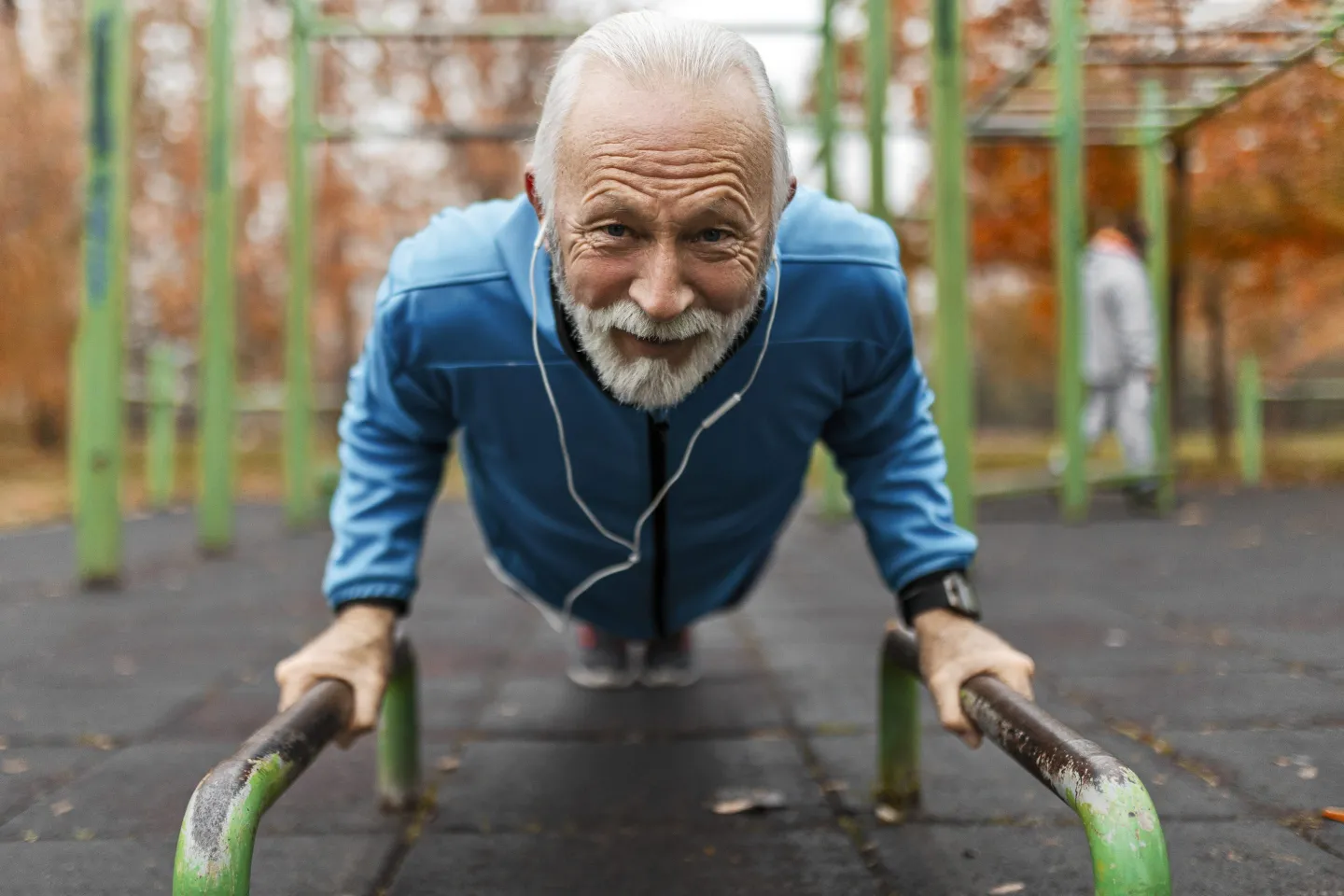
Longevity experts say that even modest strength training – as little as 10 minutes a day – can counter act age-related physical decline!
Did you know that after age 30, adults can lose 3% to 8% of their muscle mass per decade. The good news? You have more control over this process than you might think. The most effective strategy for fighting muscle loss is resistance training or exercises that challenge your muscles to work against force.
If you’re new to strength training, begin with simple body-weight workouts that cover upper-, lower- and full-body movements. For sedentary older adults, modified variations such as box squats, wall push-ups and seated leg lifts are excellent entry points. Focus on good form with controlled movement and proper breathing — exhaling during the exertion phase of each exercise.
Current guidelines from the US Centers for Disease Control and Prevention recommend strength training at least two days per week, targeting all major muscle groups. But some research suggests that older adults may benefit from even more frequent training, with some studies showing advantages to three sessions weekly for muscle growth. But here is the thing, these sessions do not have to be long for a longevity boost, even as little as 10 -15 minute “micro-workouts” per day can make a “macro” difference!
This is because muscle responds to stimulus, and even modest strength training with consistency and effort can work toward countering age-related decline. The key is progressive overload: gradually increasing the difficulty of your exercises over time. As you feel stronger, you should progress by adding repetitions, slowing down your movement tempo or eventually incorporating resistance bands or weights.
Adding weight doesn’t have to mean jumping straight to dumbbells or other free weights. To start, consider incorporating the use of a weighted vest or ankle and wrist weights to increase resistance in any body-weight exercises, including walking.
How Does Building Lean Muscle Increase Longevity?
Building muscle doesn’t only make you look fitter and feel stronger, it improves your health because muscle is “metabolically active,” meaning it burns calories even at rest and plays a crucial role in regulating blood sugar. When you lose muscle mass, your metabolism slows, making it easier to gain weight even if your eating habits haven’t changed. Your body also becomes less efficient at managing glucose, which increases your risk for insulin resistance and type 2 diabetes. Muscle also can improve bone health and lessen the risk of osteoporosis.
Beyond that, maintaining muscle preserves your functional independence. Strong muscles stabilize your joints, improve your balance and give you the capacity to recover if you stumble.
These are just some of the many antiaging benefits of strength training. However, as always, check with your doctor or physical therapist before beginning any new exercise program.
